 Español
 English
 Français
 Deutsch
 Norsk
Norsk Svenska
 Italiano
 Português
 Suomi
Suomi Nederlands
 Dansk
Dansk Polski
 Čeština
 Slovenčina
 Magyar
 Slovenščina
 Български
 Hrvatski
 Österreich
 België
Orange Varieties
The orange is an edible citrus fruit of Asian origin obtained from the sweet orange tree (Citrus x sinensis). It is a fleshy hesperidium with a more or less thick, hardened skin, and its flesh is made up of a considerable number of segments full of juice, which contains a great deal of vitamin C, flavonoids and essential oils. The orange is a hybrid of already ancient origin, probably between pomelo and mandarin.
The word orange ultimately comes from the Sanskrit "narang" or from the Tamil language. The fruit typically has 11 individual pieces, and in the Tamil language the word "orangu" translates as "6 and 5", implying 11. Oranges originated in Southeast Asia, in India, Vietnam or in southern China. The fruit of the Citrus sinensis is called "sweet orange" to distinguish it from the fruit of the Citrus aurantium, the bitter orange.
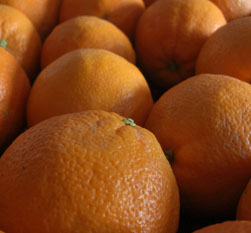
The Arabs introduced the bitter orange tree into Europe through southern Spain in the 10th century. The Arabs called it naranche, a name derived from the term arangus by which the Persians referred to this fruit.
It is smaller and sweeter than the pomelo or grapefruit and larger, though less fragrant, than the mandarin. There are many varieties of oranges, most of them hybrids produced from the species citrus maxima, citrus reticulata (mandarin) and citrus medica (citron).
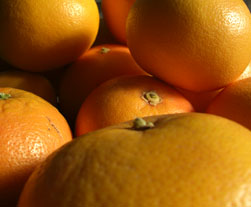
The orange is one of the most widely consumed fruits in the world, and it is grown especially in regions with a temperate and humid climate.
There are numerous varieties of oranges with particular features in their flavour, juiciness, size, growing conditions and differing productivity. This makes it possible to choose the most suitable type for each specific use; whether for consumption as a table fruit, for juice, for the manufacture of various products (jams, fruit salads...), etc. Sweet oranges are the table oranges par excellence, while bitter oranges have such an acidic and bitter flavour that they are not usually eaten raw and are reserved for making jams and obtaining essential oils.