
 Español
 English
 Français
 Deutsch
 Norsk
Norsk Svenska
 Italiano
 Português
 Suomi
Suomi Nederlands
 Dansk
Dansk Polski
 Čeština
 Slovenčina
 Magyar
 Slovenščina
 Български
 Hrvatski
 Österreich
 België
Origin of the Paulownia
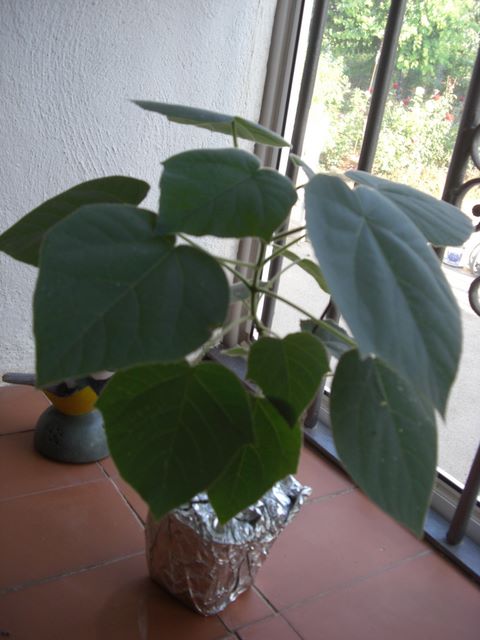
The Paulownia is a genus of 17 species of plants in the monogeneric family Paulowniaceae, linked to the Scrophulariaceae. They are native to China, from southern to northern Laos and Vietnam, and all the cultivable areas of East Asia, mainly in Japan and Korea. The name of the genus honours the Grand Duchess Anna Pavlovna of Russia (1795–1865), daughter of Tsar Paul I of Russia. It was introduced into Europe in 1834 through France from Japan.
The Paulownia is known in Japanese as Kiri, specifically the Paulownia tomentosa, also known as the empress tree. The name Kiri comes from the Japanese word for “to cut”, since it was once believed that the tree grew better and faster if pruned often.
In China an old tradition is to plant an “empress tree” when a girl is born. Its high growth rate will accompany the girl. And when she is chosen in marriage, the tree is cut and its wood is used for carpentry items for the dowry; carving Paulownia wood is an art in Japan and China.
The Chinese have planted Kiri near their homes for centuries to attract good luck and the mythological Phoenix. According to Chinese mythology, this bird, a symbol of immortality for rising from its ashes, perches only on the branches of this tree and gains immortality by drinking the dew of its flowers.
Back